A B S T R A C T
Using ˇZiˇzek’s concept of ontological incompleteness, we theorise the touristic appeal of online
legend-tripping as derived from the fantasy of traversing reality’s uncharted horizons. While
online legends such as ‘the Backrooms’ invoke curiosity in suffering and the macabre, they
deviate from the sense of heritage, moral guardianship, and evidential integrity that characterise
physical dark tourism. Drawing upon an observational netnography of the ‘r/backrooms’ community
on Reddit, we unpack processes of temporal suspension, ‘good’ alienation, and transcendence
downward which enable online legend-tripping to function as a ‘para-terrestrial’ variant of dark
tourism. The importance of real-world referents recedes, giving way to subjective encounters with
the unknown. Obscene enjoyment displaces moral engagement, and participatory mythmaking
supplants the bureaucratisation and commoditisation of travel experiences.
You know, it is gratifying when you point out a very obvious (to you) hanging thread, and someone takes the time to follow it and, most importantly, has the capacity to comprehend it. Good job, lads.
The truth is out there… sometimes… maybe… well, Hine and Buckley just aren’t sure. UFOs, UAPs, Flying Saucers, Alien Spacecraft, whatever you think they are, you don’t know for sure – and if you think you do know for sure, it’s a sure sign you don’t.
What you do know for sure is that you are told a lot of different things about them by a lot of different people: abductees spinning stories of high strangeness, senators pressuring whistle-blowers for information in congress, devoutly religious authors telling tales of angels and demons, folklorists and scholars of comparative religion painting vivid pictures of ancient beings dressed up in the skin of Technicolor sci-fi nightmares… no-one agrees and everyone is out to prove that their interpretation is the right interpretation – but what does any of it actually mean?
In this episode Hine and Buckley don’t analyse the verisimilitude of the stories or the veracity of the storytellers but instead examine the discourse around the phenomena or more accurately the discourse around the discourse around UFOs. The mechanisms with which people might think about this topic and the reasons that they may think in that way.
The conversation around UFOs is big business, a lot of people making a lot of money – but who are these people and what happens to that money? Where did it all start? Was it Peter Levenda that stealthily laid the ground work over the last 50 years to shape the UFO movement as we know it today? Why would people lie about this stuff? Why should you believe some conspiracy theorist warning you of the terrible dangers of the existential crisis that UFOs pose anymore than you should trust some conspiracy theorist warning you of the terrible dangers of vaccines and their link to childhood autism?… and if the people who are trying to take control of the discourse are lying, overly-gullible or deluded, then is there really any truth out there at all? (recorded 23 April 2026)
Received my ‘Mycellium Parish News 2025‘ in the mail. Great zine and I highly recommend. @rawilson23.bsky.social published a review on their site, so go check that out. Ong’s Hat: COMPLEAT received a very kind and generous review in this issue.
Or you can just receive them through this Substack.
You get the picture.
Twice a month, I will publish, in order, a chapter of the book and the corresponding discussion audio. At the risk of sounding like a broken record, this is a multidisciplinary work: the text is one part, the audio is another, and the links within the text add a different dimension. Sequoyah and I discuss it in depth, including how I intended people to experience this design. Here’s a video of that discussion:
Here is the first chapter, with a bonus intro by David Metcalfe, which was previously included only in the print version.
I hope you enjoy this free experiment and know that it was made possible by those who bought the print/audio or combo. If you’d like to donate some change to thank us for the tremendous effort it took to produce 14 hours of audio and all the linked print for this project, feel free to buy the audio files on Bandcampor the print or digital versions of the books. If you can’t afford it, that’s ok. The people who bought the work this year and last year covered for you. Kinda like a “pay it forward” model.
It wasn’t until the 1980s when strange tales emerged on various bullet board services and magazines of conspiracy theorists that people thought about the place again. The publications detailed elaborate conspiracies involving mystics and scientists breaking through to another realm via Ong’s Hat. The tales arose from the novel “Incunabula Papers: Ong’s Hat and Other Gateways to New Dimensions.” Author Joseph Matheny probably didn’t anticipate his fictional tales would lead to theorists believing every word until the 2000s, seeking answers of the “truth.”
If you find one of the outdated maps from the 1930s or earlier, you may well be able to pop over to the ruins with your drone. Or visit Google and find the Ong’s Hat Parking area at the Batona Trail and hike out.
“Ong’s Hat” is considered one of the oldest urban legends originating on the internet, and is akin to a creepypasta or SCP. Ong’s Hat is a real ghost town in New Jersey.
Ong’s Hat: Piney Ghost Town or Gateway to Another Dimension?weirdnj.com
Therefore, there are many anecdotes and legends about it, which seem to be similar to urban legends such as those of Inunaki Village in Japan. The synopsis is as quoted below.
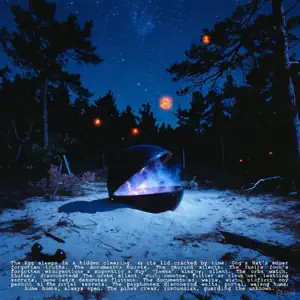
It all started with the emergence of a pamphlet, “Ongu’s Hut: Gateway to Multiple Dimensions, Full-Color Pamphlet for the Chaos Institute and the Moorish Scientific Monastery,” which suddenly began circulating in the late 1980s. According to the pamphlet, Ongu’s Hut was once the site of secret experiments by quantum mechanics researchers the Dobbs Brothers. Nearby, the mystic Wali Fard had founded the Moorish Scientific Monastery. Eventually, scientists and mystics met, merging metaphysical disciplines—including meditation, physics, alchemy, and remote viewing—in unprecedented ways, opening up new frontiers for further experimentation. The pamphlet describes how, after repeated complex and bizarre experiments, they finally pierced the veil between parallel worlds and developed the “Egg,” a pod that allows travel to other dimensions. However, after a mysterious nuclear accident at a nearby military base exposed them to the risk of radioactive contamination, they used the Egg’s technology to transport the entire monastery and its inhabitants to a parallel Earth, leaving only the building for the gateway behind. The end of the pamphlet invites readers to Ongu’s Hut and discover the transdimensional community there, but cautions that it will not be easy.
Matheny first launched the project around 1988, collaborating with anarchist author Peter Lamborn Wilson, physicist Nick Herbert, and artist James Cohenlein to create a legend of paranormal activity in New Jersey. Initially, Matheny and his friends spread the legends through catalogs of magazine articles and ghost books that they compiled and mailed out, but in 1993 they continued the story using the then-new medium of the internet.
However, preceding Publius Enigma was what expert Szulborski (2005) suggests was truly the first ARG experience, Ong’s Hat / Incunabula. The Ong’s
Hat experience differed in that it intertwined two different narrative from both Ong’s Hat Ashram
in the 1970’s as well as that of “Incunabla Papers” (Szulborski, 2005a). Moreover, this experience
is only said to have precluded the modern ARG because it began so many years prior to the
introduction of technologies that now characterize the genre. The experience was so large and
spanned over so many years, that experts are unable to agree on when it actually began.
Furthermore, this experience was so ahead of its time that it has been dubbed as a
“literary/digital crossover” (Szulborski, 2005a) that incorporated mediums such as the CD-Rom,
traditional print, bulletin boards and eventually, the internet(Szulborski, 2005a). In fact, a
co-creator of the experience’s CD-Rom has suggested that Ong’s Hat included 23 complex puzzles,
some of which have yet to be solved or even identified (Szulborski,
2005a).
Consequently, many lessons were learned in this generation of ARGs that aided insofar as
identifying feasible experiential scope, depth of cross-media convergence and appropriate timelines
for the current generation. Additionally, because this
generation of ARGs would effectively draw to a close in the early to mid 1990’s, a majority of the technologies that characterize the current generation of ARGs were
beginning to emerge and shape the next generation.